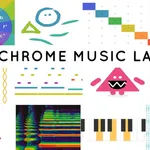






Chrome Music Lab
Chrome Music Lab: A Sonic Canvas for Digital Artists
Stepping into the world of Chrome Music Lab feels less like opening a traditional game and more like unlocking a digital instrument designed for the modern creator. This browser-based suite serves as a playground where visual expression meets auditory synthesis, allowing users to bridge the gap between abstract art and complex musical theory. Whether you are a seasoned musician or a complete novice, Chrome Music Lab provides the necessary tools to turn simple input into coherent, rhythmic soundscapes.
At its core, Chrome Music Lab operates on the principle of immediate feedback. When you interact with the interface, you are not just drawing; you are defining the frequency and timing of a sonic event. This seamless integration of input and output is why Chrome Music Lab remains a top-tier choice for educators and hobbyists alike. The platform simplifies the barrier to entry, ensuring that your first interaction is as rewarding as your hundredth.
Breaking Down the Core Loop
The fundamental loop of Chrome Music Lab relies on the user's ability to manipulate visual patterns that the engine interprets as musical data. By dragging your cursor across the grid, you dictate the pitch and duration of notes. This creates a tactile connection to the music, transforming the mouse into a brush that paints with sound. Chrome Music Lab excels here because it removes the intimidation factor often associated with traditional music composition software.
To succeed in Chrome Music Lab, you must understand how your spatial inputs correlate with the underlying scale. The engine maps horizontal movement to time and vertical movement to pitch. Mastering this relationship allows you to compose intricate melodies that feel intentional rather than chaotic. The simplicity of Chrome Music Lab is its greatest strength, offering a sandbox that grows in complexity alongside your own creative ambitions.
Why Chrome Music Lab Captivates Creatives
Why do millions of users continue to return to Chrome Music Lab? It is the intersection of playfulness and precision. Unlike rigid professional workstations, Chrome Music Lab encourages experimentation. You can adjust the tempo, change the instrument timbre, and layer multiple tracks to see how different textures interact. Chrome Music Lab invites you to explore the science of sound through a lens of pure, unadulterated fun.
- Experimentation: Test how different shapes impact the overall rhythm of your composition.
- Education: Utilize the visual grid to learn how musical intervals function in real-time.
- Collaboration: Share your unique links to let others remix your work within Chrome Music Lab.
Harmonic Telemetry and Procedural Data
| Metric | Technical Specification |
|---|---|
| Primary Engine | Web Audio API |
| Developer | Google Creative Lab |
| Input Latency | Ultra-Low (Browser Dependent) |
| Composition Mode | Grid-Based Sequencing |
Understanding Frequency Mapping
To truly harness the power of Chrome Music Lab, you need to look at the grid as a mathematical coordinate system. Every square you activate in Chrome Music Lab represents a specific frequency. By layering these notes, you create chords and harmonies that the browser processes instantly. Chrome Music Lab uses the Web Audio API to ensure that your compositions are rendered with high fidelity, preventing the artifacts that often plague web-based audio tools.
When you are deep in the creative process, keep in mind that Chrome Music Lab is constantly recalculating the waveform of your output. This means that even subtle adjustments to your drawing can lead to dramatic shifts in the resulting melody. Chrome Music Lab rewards those who pay attention to these micro-adjustments, as they are often the difference between a flat sound and a vibrant, professional-grade composition.
Pro-Tip: Use the settings menu in Chrome Music Lab to lock your scale to a specific key, like C Major or Pentatonic, to ensure your drawings always sound melodically pleasing regardless of your input patterns.
Scaling Your Melodic Output
As you progress, you will find that Chrome Music Lab supports more than just simple melodies. You can simulate percussion by placing notes on the lower registers of the grid. By alternating these with higher, melodic notes, you can create a full-bodied piece of music entirely within Chrome Music Lab. This versatility is exactly why Chrome Music Lab is often used in classrooms to teach the foundational concepts of rhythm and composition.
Don't be afraid to clear the board and start fresh. Chrome Music Lab is designed for rapid iteration. If your current idea isn't resonating, the ability to wipe the canvas and try a different rhythmic structure is a core feature of the Chrome Music Lab experience. The more you iterate, the better you will understand the underlying mechanics that make Chrome Music Lab such a powerful creative engine.
Mastering the Art of Auditory Synthesis
The journey through Chrome Music Lab is one of constant discovery. As you become more comfortable with the interface, you will start to see the grid not as a set of squares, but as a timeline of potential. Chrome Music Lab challenges you to think about music as a visual language. This shift in perspective is what makes Chrome Music Lab an essential tool for any aspiring digital artist or musician.
Ultimately, Chrome Music Lab is about the freedom to create without the fear of failure. If a note sounds off, you simply move it. If a rhythm feels sluggish, you adjust the BPM. Chrome Music Lab provides the infrastructure, but you provide the soul. Whether you are creating a simple beat or a complex symphony, Chrome Music Lab remains the best place to start your journey into sound design.
Advanced Composition Techniques
For those looking to push the boundaries of Chrome Music Lab, consider using the 'Save' feature to track your progress over time. By building on previous drafts, you can create long-form compositions that exceed the initial limitations of a single screen. Chrome Music Lab allows for this growth, turning short loops into sprawling musical adventures. Always remember that Chrome Music Lab is a tool that grows with your skill level.
Another technique involves using the 'Octave' settings within Chrome Music Lab to add depth to your tracks. By layering octaves, you can create a richer, fuller sound that fills the speakers. This is a common trick used by producers, and it is easily accessible within the Chrome Music Lab interface. Experimenting with these advanced settings will help you unlock the full potential of your musical ideas.
Final Thoughts on Creative Expression
As technology continues to evolve, platforms like Chrome Music Lab will only become more important. They democratize music creation, ensuring that anyone with an internet connection can express themselves. We hope this deep dive into Chrome Music Lab has inspired you to open a new tab and start drawing your own melodies. The world of Chrome Music Lab is waiting for your unique contribution, so grab your mouse and get started.
The beauty of Chrome Music Lab lies in its simplicity and its depth. It is a testament to how accessible music theory can be when presented with the right interface. We encourage you to keep exploring, keep drawing, and most importantly, keep making music. Chrome Music Lab is more than just a game; it is a gateway to a lifetime of creative expression.