





Space Plan
Space Plan: The Geometry of Idle Progression
| System Metric | Operational Data |
|---|---|
| Developer | Playables |
| Primary Input | Click-to-Generate |
| Genre | Minimalist Incremental |
| Engine Framework | Web-Native Simulation |
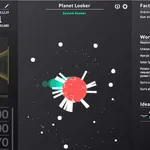
When you first launch Space Plan, the interface presents a stark, minimalist aesthetic that feels almost deceptive. You are greeted by a lone spacecraft orbiting a mysterious, pixelated celestial body, with no manual and very little context. This is the brilliance of Space Plan; it invites you to interact with a system that seems simple but hides a deep, narrative-driven core beneath its surface.
The game engine relies on your direct input to initiate the energy cycle. Every single action you take in Space Plan serves a purpose, moving you away from the manual grind and toward a fully automated system. It is a masterclass in pacing, forcing the player to respect the exponential growth curve inherent in clicker design while rewarding curiosity.
The Mechanics of Manual Energy Extraction
At the start, your existence in Space Plan is defined by the left-click button. You are the engine, the battery, and the engineer. By clicking the central interface, you generate initial units of power, which serve as the foundation for every future upgrade. This manual labor is not just busywork; it is a vital lesson in the game's economy.
The game tracks your inputs with precision. As you click, you notice the console logs flickering with cryptic messages. These logs are the heartbeat of Space Plan, providing context to your repetitive labor. You aren't just clicking to make numbers go up; you are clicking to decode the mystery of the planet you are orbiting. This narrative layer elevates Space Plan above generic idle games that focus purely on statistics.
Transitioning from Manual Labor to Automation
Once you secure your first few upgrades, the nature of Space Plan shifts dramatically. You move from being a participant in the energy generation to an architect of a self-sustaining system. The transition is subtle but critical. You start by purchasing simple probes, which replace your manual clicks with consistent, automated output.
This is where the strategy of Space Plan becomes apparent. You must constantly evaluate whether to invest in current production capacity or save for the next tier of technology. The math behind Space Plan is tight, ensuring that every decision feels significant. If you miscalculate your spending, you risk stalling your progress, which is the primary failure state for any serious player of Space Plan.
Space Plan: The Hidden Traps of Exponential Scaling
While the game feels relaxed, Space Plan hides a complex layer of scaling traps that can easily derail an inexperienced player. Many newcomers assume that buying every available upgrade is the optimal strategy. However, Space Plan rewards those who prioritize efficiency over breadth. If you spread your resources too thin, you will find your energy generation stagnating.
The game’s design forces you to look at the 'time-to-payoff' for every single upgrade. If an upgrade costs more than the total energy you can generate in a reasonable timeframe, it is effectively a trap. Space Plan teaches you to optimize your resource allocation, a skill that is transferable to almost any other management simulation.
Analyzing Resource Efficiency Metrics
Efficiency in Space Plan is not just about having the biggest number; it is about having the most stable growth rate. You should prioritize the following to ensure you don't get stuck:
- Multipliers: Always prioritize upgrades that increase the output of your existing automated systems.
- Time-to-Payoff: Calculate how many seconds it takes for an upgrade to pay for itself before committing resources.
- Narrative Milestones: Focus on objectives that unlock new types of probes, as these often provide the biggest leaps in production.
By following these steps, you maintain a steady upward trajectory. Space Plan is designed to be completed, not played forever. This finite nature is a breath of fresh air in a genre often filled with endless, unrewarding loops. When you play Space Plan with a strategy in mind, the game rewards you with a cohesive story that concludes perfectly.
The Danger of Over-Investing in Early Tech
One of the most common mistakes in Space Plan is over-investing in early-game probes. While these are necessary at the start, they quickly become obsolete as you progress further. The game engine is balanced to make later-stage technology significantly more efficient than early-stage tools. Therefore, clinging to your starting upgrades in Space Plan is a recipe for disaster.
Pro-Tip: Never let your energy reserves sit idle. If you have enough power to purchase an upgrade, do it immediately. Idle power is wasted potential in the context of Space Plan, and your goal should always be to maximize your production rate at every possible second of gameplay.
You must learn to shed your reliance on early game mechanics. Space Plan demands that you evolve your strategy alongside your technology. As you unlock more complex probes, your early manual clickers and basic generators should become footnotes in your history. This evolution is the key to conquering Space Plan efficiently.
Space Plan: The Muscle Memory of Orbital Mechanics
As you near the end of the game, the rhythm of Space Plan becomes almost hypnotic. You aren't just managing numbers anymore; you are managing a flow of data. The visual feedback provided by the interface allows you to develop a form of muscle memory. You know exactly when to check the logs, when to purchase an upgrade, and when to sit back and watch the simulation run its course.
This phase of Space Plan is where the game truly shines as a minimalist experience. The interface is clean, the feedback is immediate, and the satisfaction of watching your energy generation soar is unmatched. It is a testament to the developers of Space Plan that they were able to create such a compelling loop with such limited visual assets.
Synchronizing Your Input with System Logs
The logs in Space Plan are not just flavor text; they are your guide. By synchronizing your upgrades with the narrative progression, you stay ahead of the curve. Space Plan is a game of timing. If you wait too long to upgrade, you miss out on the compounding interest of your energy production. If you upgrade too early, you risk a temporary deficit.
This balance requires a keen eye and a steady hand. Space Plan is not an idle game you can simply ignore. It requires active management, even if the clicking becomes less frequent. Your engagement with the system logs in Space Plan is what separates a casual player from a master of the orbital simulation.
Final Verdict on the Minimalist Loop
Space Plan is more than just a game; it is a minimalist experiment that succeeds where others fail. By keeping the scope small and the narrative tight, the developers have created an experience that respects the player's time. Space Plan does not demand hundreds of hours of mindless clicking. Instead, it asks for your focus for a few hours of intense, rewarding strategy.
If you appreciate games that value design over spectacle, Space Plan is an essential title. The way it weaves story into the mechanics of a clicker is nothing short of brilliant. Space Plan reminds us that even in the simplest of genres, there is room for innovation, narrative depth, and mechanical complexity. Every player should experience the unique loop of Space Plan at least once.
Frequently Asked Questions About Space Plan
How do I increase my energy production rate efficiently in Space Plan?
To maximize your energy output in Space Plan, you must focus on buying multipliers rather than just base generators. Always calculate the cost versus the return on investment for each upgrade. Prioritizing the most expensive upgrade you can afford is usually the correct strategy to keep your production curve exponential rather than linear.
What should I do if my progress in Space Plan feels like it has stalled?
If your progress feels stuck, you are likely suffering from inefficient resource allocation. Check your current upgrades in Space Plan and identify which ones are no longer contributing significant value. Shift your focus to the latest technology tier, as these upgrades are balanced to provide much higher yields than early-game options. Also, ensure you are actively reading the system logs, as they often provide clues regarding the next necessary upgrade.
Is there an optimal ending strategy for Space Plan?
The optimal strategy for finishing Space Plan involves a strict adherence to narrative milestones. The game is designed with a clear conclusion, so avoid getting distracted by non-essential upgrades. Keep your energy production growing at a steady rate, and always prioritize the upgrades that unlock new story chapters. By staying focused on the end goal, you can complete Space Plan in a very efficient timeframe.